
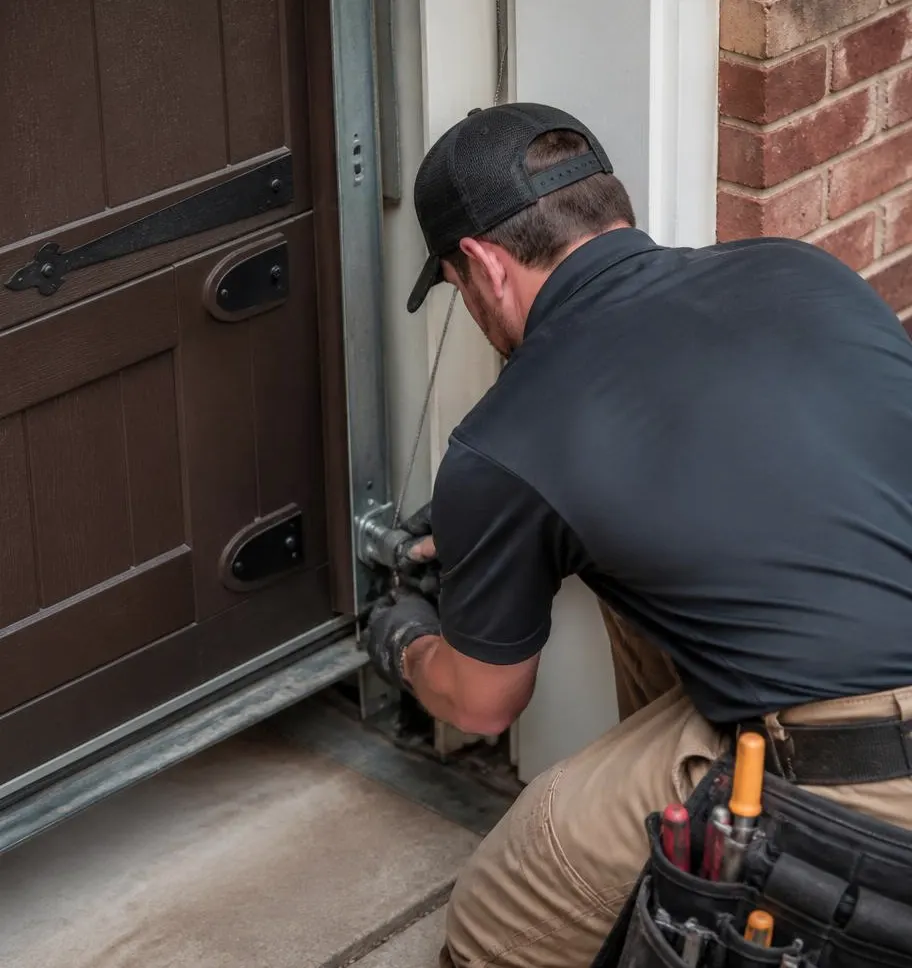
Why Your Grafton Garage Door Won't Budge on Freezing Mornings
If your garage door won't open on a freezing morning, nine times out of ten it's ice holding the bottom seal to the slab, not a mechanical failure. The exceptions are worth knowing, though: if the door struggles every cold day regardless of ice, reverses partway up, or the opener motor hums without moving the door, you're probably looking at a lubrication, spring, or opener problem that the cold is just making obvious. Northeast Ohio's swing between humid summers and salted, icy winters is hard on garage door hardware, and a door that worked fine in October can act up fast once temperatures drop and stay there.
Symptoms to Watch For
- Door won't move at all and looks sealed to the concrete along the bottom edge.
- Door opens a few inches then reverses or the opener light blinks and stops.
- Door moves slower than usual, with jerky motion or grinding noise from the tracks.
- Opener runs but the door doesn't lift, or lifts unevenly on one side.
- Door works fine by hand (after disconnecting the opener) but not with the remote or wall switch.
Which symptom you're seeing points to a different cause, and a technician will usually check them in roughly this order because it goes from most common and cheapest to fix, to most involved.
1. Ice Sealing the Bottom to the Slab
This is the most common cold-weather issue and the first thing to rule out. Snowmelt, slush tracked in from the driveway, or condensation under the door can freeze overnight, gluing the rubber weatherstrip to the concrete. The opener senses the resistance and either strains, trips the safety reversal, or stalls out entirely.
The fix: Don't force it with the opener, which can strip gears or bend the track. Score along the seal with a flat tool or pour warm (not boiling) water along the bottom edge to break the ice, then try lifting manually. Long-term, a new bottom seal and keeping the slab clear of slush before it refreezes prevents repeat problems.
2. Stiffened or Dirty Lubricant on Rollers, Hinges, and Track
Grease and oil thicken as temperatures fall, and if the lubricant on your rollers and hinges was already old or dirty, cold weather turns sluggish into stuck. This shows up as slow, jerky, or noisy movement rather than a door that's frozen solid.
The fix: Clean off old grime with a dry cloth, then apply a silicone-based or lithium garage door lubricant to the rollers, hinges, and track rollers — not WD-40, which is a cleaner, not a lubricant, and attracts more dust over time. This is a maintenance task worth doing every fall before the real cold sets in.
3. Opener Force and Travel Settings Out of Calibration
Cold affects how much resistance the opener's force sensors detect. A door that moves a little stiffer in the cold can trip the opener's safety reversal even though nothing is actually broken, especially on older openers with worn gears or a weakening capacitor.
The fix: A technician checks and adjusts the open/close force and travel limits on the opener unit. If the opener itself is aging — typically showing its age after 10-15 years of regular use — this is also when a failing capacitor or worn gear set gets flagged for repair or replacement.
4. Torsion Spring Tension Shifting with Temperature
Metal contracts in the cold, and torsion springs can lose a small amount of effective tension when temperatures drop sharply. A door that was balanced perfectly in September can feel heavier to lift in January, straining the opener or making manual lifting noticeably harder.
The fix: This requires a balance check — disconnecting the opener and seeing whether the door stays roughly in place when lifted halfway. If it drops, the spring needs adjustment or replacement. This is not a DIY task; torsion springs are under heavy tension and incorrect handling can cause serious injury.
5. Rusted or Icy Cables and Pulleys
Road salt tracked in on tires and boots, combined with humidity and freeze-thaw cycles, speeds up corrosion on cables, pulleys, and the bottom brackets they attach to. A cable that's starting to fray or a pulley that's seized with rust adds resistance right when the cold is already working against you.
The fix: Visual inspection of cable strands and pulley movement, with replacement of any cable showing fraying or rust pitting. This is usually caught during a seasonal maintenance visit before it becomes a safety issue.
6. Track Alignment Thrown Off by Frost Heave
If your garage slab has shifted slightly from frost heave — common with the freeze-thaw cycles typical of this part of Ohio — the tracks bolted to the frame can go slightly out of alignment. This shows up as a door that binds or rubs in one spot rather than struggling the whole way up.
The fix: Track realignment, and in some cases shimming or re-securing the track brackets to the frame. This is usually the last thing checked because it's the least common cause, but it's worth ruling out if the other fixes don't solve a recurring bind.
When to Call Grafton Garage Door
If warm water and fresh lubricant don't get your door moving smoothly, or if you're hearing grinding, seeing the door reverse on its own, or noticing it's harder to lift by hand than it used to be, it's time to call in a professional rather than keep testing the opener's patience. Our Garage Door Maintenance visits cover lubrication, cable and pulley inspection, and spring balance checks before winter fully sets in, and our Garage Door Repair team handles everything from opener recalibration to spring replacement if the cold has exposed a real mechanical issue.
If your garage door is giving you trouble this winter, call Grafton Garage Door — we serve Grafton, Elyria, LaGrange, Wellington, Oberlin, Amherst, Lorain, and Avon, and we'll get your door moving reliably again before the next cold snap.